




%20(1)-Oct-14-2026-03-04-44-3197-PM.png?width=750&height=450&name=RedBeam%20Blog%20Photos%20(1000%20x%20600%20px)%20(1)-Oct-14-2026-03-04-44-3197-PM.png)



Assembly Line RFID: How It Works at Every Station
Summary • 15 minutes read
Share


%20(2)-3.png?width=1062&name=RedBeam%20Blog%20Photos%20(1000%20x%20600%20px)%20(2)-3.png)
Parts move through your line all day. But when a build falls behind, nobody can say which station is holding it up. Parts go missing mid-assembly, lead times slip, and the timelines you promised start to drift. By the time someone walks the floor to investigate, the delay has already grown.
Assembly line Radio Frequency Identification (RFID) closes those blind spots by tracking every item at each production stage. Once readers sit at your workstations, no manual scans are needed, so nothing slows the conveyor and nothing depends on an operator remembering to scan.
When software connects those read events to your Manufacturing Execution System (MES) and Enterprise Resource Planning (ERP), you get more than location data. You get error-proofing at build time. You get real-time visibility into Work in Process (WIP).w. And compliance records are generated on their own from reads already happening on your floor.
Main Takeaways
- Fixed readers at each workstation capture tag reads on their own. No operator scanning is needed.
- Mobile Zebra readers cover the manual stations,off-line rework benches, and flexible zones that fixed infrastructure does not reach, including locating a part that missed a fixed read.
- Read-zone design and antenna placement must be tested at conveyor speed before go-live.
- If a tag is read out of sequence, the software triggers a line stop or reroute before a mis-build moves forward.
- Tag selection depends on the harshest condition each item faces, including paint ovens, metal surfaces, and wash-down areas.
- Pushing read events into your MES and ERP in real time is where most deployments stall.
- On closed-loop lines, reusable tags on carriers and skids spread tag cost across thousands of reads, which is where assembly Return on Investment (ROI) often beats open-loop retail tagging.
How Assembly Line RFID Works, Station by Station
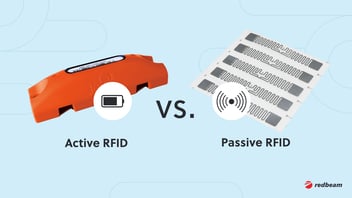
Assembly line RFID uses fixed readers at each workstation and passive Ultra-High Frequency (UHF) tags on components or carriers. These capture read events on their own as items move down the line. No operator has to pick up a scanner. The system sees every item the moment it enters a station's read zone.
The physical setup starts with one or more fixed RFID readers mounted at each workstation. Antennas sit at doorframes, overhead gantries, or conveyor side-rails to create defined read zones. Passive UHF tags attach to the component, a carrier tray, or a painted skid. The choice depends on the item and the environment it passes through. When an item enters a reader's zone, the antenna captures the tag ID and triggers a software event. Zebra fixed readers are the hardware standard for these deployments, with models like the Zebra fixed readers are the hardware standard for these deployments. Models like the FX9600 and FX7500 built for fixed-portal and workstation mounting. For the harshest plant zones, the ultra-rugged FXR90 features IP65/IP67 sealing alongside built-in 5G to bypass expensive network cable runs. As a Zebra Premier Independent Software Vendor (ISV) Partner, we build our platform around that hardware.
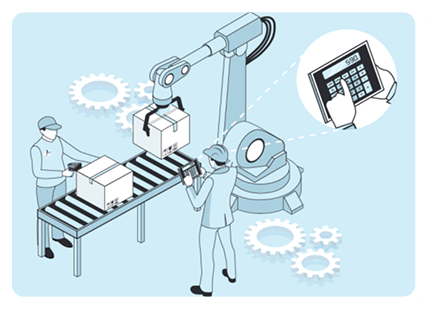
Here's what the station-by-station flow looks like in practice:
- A reader at Station 1 (Intake) captures the tag ID.
- The software opens the MES work order.
- A reader at Station 2 confirms the first operation is complete.
- A reader at Station 3 validates the build sequence.
- The final reader at Station 4 (FInal Output) triggers an ERP inventory deduction and closes the work order.
On mixed-model lines producing multiple product variants, the tag's data tells the system which build instructions to apply at each station. The reader doesn't just confirm presence. It directs the build.
Read-zone design matters more than most teams expect. Read rates fall off quickly with distance, and they swing based-on tag design and the material each tag sits on, since metal and liquids are especially difficult. Antenna placement and tag orientation need to be tested at conveyor speed before go-live.
Where Mobile Readers Fit
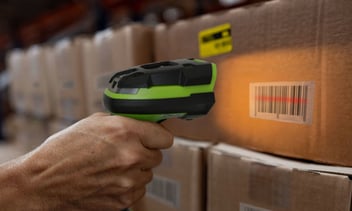
Fixed readers cover the stations you plan around. Mobile readers cover everything else. Not every station justifies permanent infrastructure, and some work happens off the main line, at an off-line rework bench, a staging area, or the receiving dock where parts first get tagged. Handheld Zebra readers fill those gaps. The TC53e-RFID mobile computer and the RFD90 ultra-rugged UHF sled let a worker walk up to a pallet, a rework cell, or a misread carrier and capture the same tag data a fixed portal would, without building a portal there.
Mobile readers also handle exceptions. When a tag misses a fixed read, a worker can re-read it on the spot instead of chasing a paper trail. When a part goes missing mid-assembly, a handheld sweep locates it in minutes. Most assembly deployments run both: fixed readers as the automatic backbone at known stations, and mobile readers for flexibility, exceptions, and the corners of the floor fixed infrastructure does not reach.
Three RFID Frequency Bands for Assembly Line Use
Three RFID frequency bands show up in assembly settings, but they are not interchangeable. Each suits a different job:
- UHF (Ultra-High Frequency): The standard for WIP tracking. It reads multiple tags at once at conveyor speed from several meters away.
- HF (High Frequency): Used for near-field component identification at short range. Verifying a specific part at a station matters more than speed here.
- LF (Low Frequency): Mainly used for access control and personnel tracking. It's rarely used in assembly because of very short read range and single-tag reads.
RAIN UHF tag shipments hit 52.8 billion chips in 2024. That's a 54% increase in just two years, according to the RAIN Alliance. That scale drives down per-tag cost and makes UHF the clear default for assembly line use.
Tag Survivability in Harsh Assembly Environments
Tag selection depends on the harshest condition each item faces on its route through the line. Here's a decision framework by environment type:
- Ambient workstations: Standard passive UHF tags. Cost-effective and reliable at room temperature.
- Paint ovens and curing processes: High-temperature tags rated to 200℃ to 250℃. These are now widely available, according to Xerafy. In the past, this was a major deployment blocker.
- Steel components and tooling: On-metal tags designed to maintain read performance on metallic surfaces.
- Wash-down areas: Chemical-resistant enclosures that protect the tag through cleaning cycles.
An automotive deployment confirmed these results even in the toughest zones. Proper tag and reader engineering achieved over 99% read accuracy through paint-line conditions, as recorded by Avery Dennison.
RFID Error-Proofing and Build Sequence Enforcement
Assembly line RFID enforces correct build sequence using rule-based read logic. If a tag is read at the wrong station or in the wrong order, the software triggers a line stop or reroute before the mis-build reaches final assembly. The software maintains an expected sequence for each tagged item. Say the expected path is Station 1, then Station 2, then Station 3. When a reader captures a tag at Station 4 without a prior read at Station 3, the system flags a sequence violation.
What happens next depends on the workflow you've configured. The event-based logic can execute several corrective actions:
- Trigger a line-stop alert.
- It can reroute the unit to a rework station.
- Lock the workstation until the issue is resolved.
This is poka-yoke: mistake-proofing built into the production flow. RedBeam's Event-Based Workflows, for example, can trigger that line-stop alert when a tag is read out of sequence. The rule-based logic runs on its own without operator action.
Wrong-Part Prevention on Mixed-Model Lines
Mixed-model lines carry multiple product variants on the same conveyor. RFID prevents wrong-part installation by matching the tag's model data against the Bill of Materials (BOM) for each station. If the wrong component arrives at a station, the system flags the mismatch before the operator begins work.
This capability is a primary purchase driver for automotive and electronics assembly buyers. A single mis-build caught after final assembly costs far more than catching it in-line. Fixing it in-line takes minutes instead of hours.
RFID ERP and MES Integration: From Read Event to Production Decision
An RFID read event becomes a production decision when software pushes it to your MES and ERP in real time. Work orders close, inventory updates, and exceptions get flagged without manual data entry.
The End-to-End Data Flow
The data flow works in four steps:
- A fixed reader captures the tag ID at a station.
- The RFID software timestamps the event and matches it to the work order.
- The software pushes a status update to the MES, such as "Operation 3 complete."
- When the final station read fires, the MES closes the work order and triggers an ERP inventory transaction.
A Representational State Transfer (REST) Application Programming Interface (API) is the standard way to connect RFID platforms to MES, Material Requirements Planning (MRP), and ERP systems without custom middleware. Our platform pushes read data to these systems in real time via REST API. That keeps production records current without batch uploads or manual re-keying.
Why Integration Is the Hard Part
Getting the read event to the right system at the right time is where most deployments stall. A 2024 Zebra study found that 86% of manufacturing leaders struggle to securely integrate devices, sensors, and technologies. That gap explains why only 16% report real-time WIP visibility across the plant.
The payoff for closing that gap is real. Deloitte has documented smart manufacturing deployments achieving 10 to 15% throughput gains, and a separate assembly line constraint-resolution program that cut mean time to resolution by 26%. There's a compliance angle too. European Union (EU) digital battery passport rules take effect February 18, 2027. They require a unique, serial-level digital record for every Electric Vehicle (EV) and larger industrial battery placed on the EU market. Assembly line RFID read events feed the data model those passports require.
Where Assembly Line RFID Delivers the Most Value
A good RFID tracking system for manufacturing does not pay off evenly across every line. The fastest returns come from a few specific conditions, and knowing them tells you where to start.
Start where the pain is most expensive. RFID delivers the most value on:
- High-mix, mixed-model lines, where wrong-part installation is a constant risk and the tag's data can direct each build.
- Bottleneck-prone stages, where real-time WIP visibility turns an invisible delay into an alert you can act on before lead times slip.
- High-value or high-rework WIP, where catching one mis-build in-line pays for a lot of tags.
- Harsh zones like paint, curing, and wash-down, where barcodes degrade and manual scanning is impractical.
- Lines drowning in manual scans, where operators lose a real fraction of each shift to scanning, and that time slows conveyor routing.
The smart first move is a single high-value zone, not the whole plant. Instrument one bottleneck stage or one mixed-model segment, prove the read rates and the integration, then expand station by station. That keeps the initial investment contained and gives you real performance data before you scale.
Is RFID the Right Fit for Your Line?
RFID is not always the answer. If your line runs a single product at low volume, with few variants and no harsh zones, barcodes may cover you at a fraction of the cost. RFID earns its place when you have variant complexity, sequence requirements, harsh environments, high-value WIP, or manual scanning that actively slows the line. If two or more of those describe your floor, RFID is worth evaluating. If none do, simpler fixes may serve you first.
What Assembly Line RFID Costs, and Where the ROI Comes From
A realistic assembly line RFID budget has four parts: tags, fixed readers and antennas, mobile readers, and the software and integration work that connects read events to your systems. Tag prices vary widely by type, from low-cost passive UHF labels for ambient use to rugged on-metal and high-temperature tags for harsh zones. Fixed readers and their antennas are a per-station cost, mobile readers are a per-device cost, and integration is usually the line item that most affects the total, since pushing read data into your MES and ERP is where the complexity lives.
ROI on an assembly line comes from three places:
- Labor saved by eliminating manual station scans, recovered every shift.
- Rework cost avoided by catching mis-builds in-line instead of after final assembly.
- Throughput gained from real-time bottleneck visibility, which shortens lead times and steadies your manufacturing timelines.
Operations with high-value WIP or strict sequence and traceability requirements tend to see the fastest payback, because a single prevented mis-build or a single recovered part can offset a large share of the deployment.
The Closed-Loop Advantage
Assembly lines have a cost advantage that open-loop retail tagging does not: tag reuse. When tags ride on reusable carriers, trays, skids, or fixtures rather than on the product itself, the same tag is read thousands of times over its life. That spreads the tag cost across every cycle, so the effective per-read cost on a reusable carrier falls toward the cost of a barcode while keeping every RFID advantage. For closed-loop assembly environments, that reuse is a core part of the ROI case, and it is the reason per-tag price matters far less here than it does in retail.
Put Your Assembly Line RFID Strategy into Action with RedBeam
You now have a framework for choosing readers, selecting tags for each station's conditions, and connecting read events to your MES and ERP. Every item on your line can generate a production decision in real time. That starts with opening a work order at the first station and ends with closing it at the last.
We built our RFID platform to connect fixed readers, event-based workflows, and REST API integration into one system. It's designed for manufacturing operations managers who need station-level visibility without custom middleware. Here's what you get:
- Every location executing the same build sequence correctly.
- Real-time WIP status your team can act on right away.
- Compliance records generated on their own from reads already happening on your floor.
See how our RFID tracking approach brings real-time visibility to production lines.
FAQs About Assembly Line RFID
Do I need different RFID tags for different parts of my assembly line?
Yes. Tag selection depends on each station's environment. Standard passive UHF tags work for ambient workstations. Paint ovens or curing processes need high-temperature tags rated to 200℃ to 250℃. Steel components need on-metal tags. Wash-down areas need chemical-resistant enclosures. Pick the tag type based on the harshest condition each item faces on its full route.
Can RFID track items on a mixed-model assembly line where different products use the same stations?
Yes. The tag's data tells the system which product variant is on the line. Software then routes each unit to the correct workstation with the right build instructions. It also validates that the right parts are installed at each station. The reader directs the build based on the tag's model data, preventing wrong-part installation.
What happens if an RFID reader misses a tag at a critical station?
A missed read creates a sequence gap. When the next reader captures the tag without a prior read, the system flags a sequence violation. It can then trigger a line-stop alert, reroute the unit, or lock the workstation. This is why antenna placement and tag orientation must be tested at conveyor speed before go-live.
How do I know if my assembly line RFID deployment is delivering ROI?
Track three metrics. First, labor hours saved per shift from cutting manual station scans. Second, rework cost avoided from catching mis-builds before final assembly. Third, throughput gains from real-time bottleneck visibility. If those categories don't show clear change within 90 days, your integration layer isn't pushing read events to decisions fast enough. ROI shows up in time saved, defects caught, and flow improved.
How does RedBeam's RFID platform connect to my existing MES and ERP systems?
We push read data to MES, MRP, and ERP systems in real time via REST API. A tag read at a station can close a work order in your MES and trigger an inventory transaction in your ERP, with no manual re-keying in between. The platform manages the fixed readers at each workstation, including Zebra FX9600 and FX7500 fixed readers, and lets you define which system action each read event triggers.
-4.png?width=352&name=RedBeam%20Blog%20Photos%20(1000%20x%20600%20px)-4.png)