UHF RFID might sound like a mysterious, high-tech system — but as RedBeam’s RFID Solutions Architect Kyle Stanford explains, it’s actually based on a simple (and fascinating) conversation between two things: a reader and a tag.
In Episode 2 of our All About RFID YouTube series, Kyle breaks down exactly how UHF RFID works — from the physics of energy transfer to how data moves invisibly through the air — all in a way that anyone can understand.
The Conversation Between a Tag and a Reader
At its core, UHF RFID works through communication between two components: the tag and the reader.
The tag itself doesn’t do anything on its own — it’s passive, meaning it has no battery or power source. Instead, the reader sends out energy in the 900 MHz radio frequency range. When a tag’s antenna absorbs enough of that energy, it wakes up, powers on its microchip, and sends back its unique ID to the reader.
That quick back-and-forth exchange happens wirelessly, almost instantly. The reader then collects that data, identifying each tag it picks up. It’s not magic, but as Kyle says, it can definitely feel that way.
The Role of Antennas
You’ll often hear antennas mentioned when discussing RFID — and that’s because antennas make the communication possible.
Both the reader and the tag have antennas. The reader’s antenna sends out radio waves; the tag’s antenna receives and reflects them back. Different antennas serve different purposes: some are designed for close-range scanning, while others can read tags from a distance of many feet.
Later in the series, Kyle delves deeper into tag and antenna types — but for now, it’s essential to understand that selecting the right antennas for your environment directly impacts the performance of your UHF RFID system.
Types of RFID Readers
There are two main types of readers used in UHF RFID systems:
- Handheld Readers – Ideal for mobile use, like walking through a warehouse or retail floor to take quick inventory.
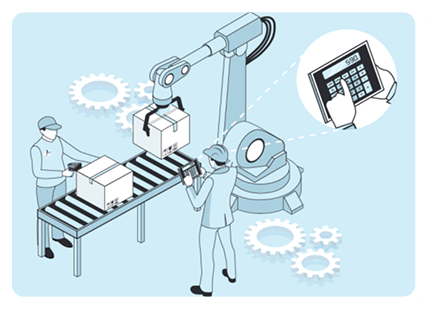
- Fixed Readers – Stationary devices, often mounted on ceilings or walls, that automatically scan tags as they pass through doorways, conveyors, or checkpoints.
Fixed readers can connect to multiple antennas and automate workflows — capturing data without manual effort. Handhelds, on the other hand, offer flexibility and control for spot-checks or audits.
Inside the UHF Spectrum
UHF RFID operates within the ultra-high frequency (UHF) range of 860–960 MHz worldwide. In the United States, the FCC designates 902–928 MHz for these systems — the same radio range used by old cordless phones that could transmit through walls.
That means UHF RFID signals can travel 10 to 30 feet or more, passing through materials like cardboard and plastic, reflecting off metal, and even being absorbed by water. This makes it ideal for reading hundreds of tags per second across a warehouse, dock door, or storage room.
Because UHF RFID uses unlicensed spectrum, companies can freely deploy it — as long as they stay within FCC power limits to avoid interference or fines.
Speed, Range, and Real-World Performance
The interaction between a UHF reader and multiple tags happens incredibly fast — so fast that you’d need a spectrum analyzer to even glimpse it.
A well-tuned system can read hundreds of tags per second, giving businesses real-time visibility into inventory, assets, and equipment. That’s what makes UHF RFID the technology of choice for large-scale tracking — from supply chain operations to hospitals, manufacturing floors, and logistics networks.
The Big Takeaway About UHF RFID
Every UHF RFID system relies on the same simple concept:
The reader energizes the tag, the tag responds, and data transfers wirelessly — all in milliseconds.
From there, businesses can analyze and act on that data to improve efficiency, accuracy, and automation.
In our next episode, Kyle breaks down the key differences between active and passive RFID — and why RedBeam focuses on the passive UHF systems that power modern asset tracking.
See It in Action
Want to see how UHF RFID can work for your business?
Schedule a RedBeam Demo and discover how simple it is to start tracking assets with accuracy and confidence.






%20(1)-Oct-14-2026-03-04-44-3197-PM.png?width=750&height=450&name=RedBeam%20Blog%20Photos%20(1000%20x%20600%20px)%20(1)-Oct-14-2026-03-04-44-3197-PM.png)



-2.png?width=1062&name=RedBeam%20Blog%20Photos%20(1000%20x%20600%20px)-2.png)
%20(1)-1.png?width=352&name=RedBeam%20Blog%20Photos%20(1000%20x%20600%20px)%20(1)-1.png)
%20(2).png?width=352&name=RedBeam%20Blog%20Photos%20(1000%20x%20600%20px)%20(2).png)