


redbeam.comhs-fshubfsRedBeam_Logo-1

When the Wrong Pallet Leaves the Dock

One mis-shipped pallet can trigger a chain reaction: a retail chargeback for a vendor compliance failure, a scramble to expedite the correct order, needless return logistics costs, and a customer left wondering if they can trust the next shipment.

RedBeam RFID confirms that what’s on the truck matches what’s on the order – without any manual operational intervention.

circle
RedBeam RFID makes shipment verification automatic:
  • Confirm inbound documentation against what a vendor actually shipped.
  • Verify at the unit or container level – SGTIN and SSCC-encoded tags make either possible.
  • Catch mismatches using mobile readers, fixed readers, or both, and alert operators to errors on the spot.
  • Check outbound orders and picks against the customer order before the truck pulls away.

How RedBeam RFID Shipment Verification Works

shipment-verifcation-accordion shipment-verifcation-accordion shipment-verifcation-accordion shipment-verifcation-accordion
Start with the tag

Items encoded with GS1-compliant RFID tags (SGTIN for individual units, and SSCC for pallets, cases, or totes) tell RedBeam exactly what’s in front of the reader.

shipment-verifcation-accordion
Connect to the order
RedBeam pulls in order details from the ASN, PO, customer order, or manifest via REST APIs connected to your system of record. RedBeam doesn’t replace that system; it simply needs to know what to check against.
shipment-verifcation-accordion
Read and confirm
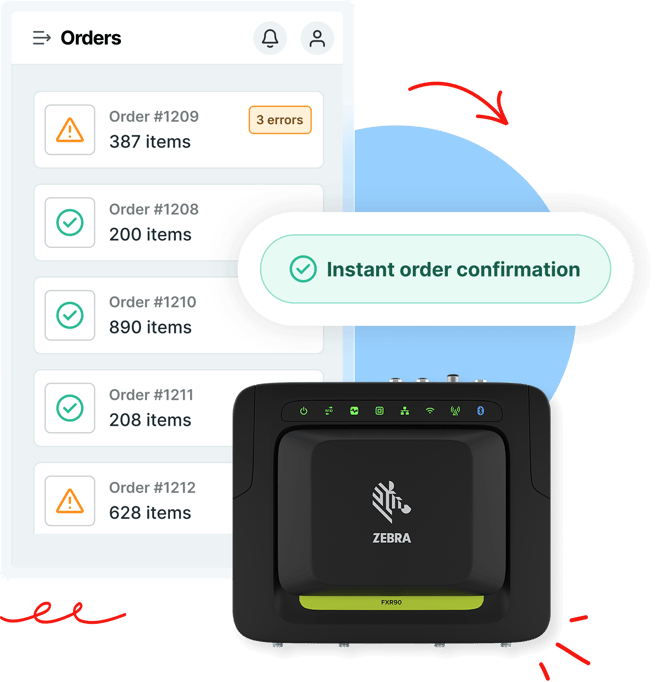
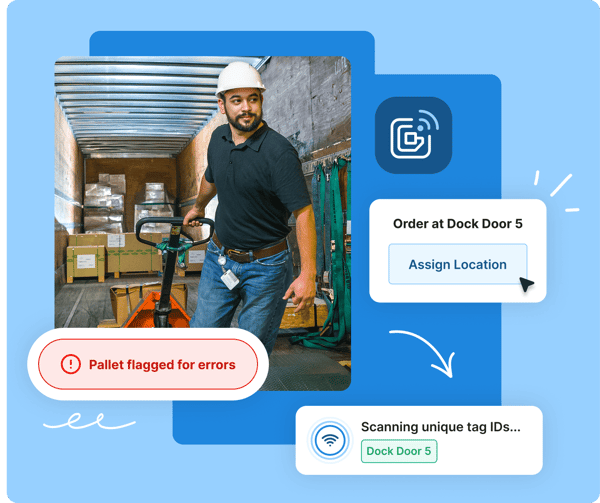
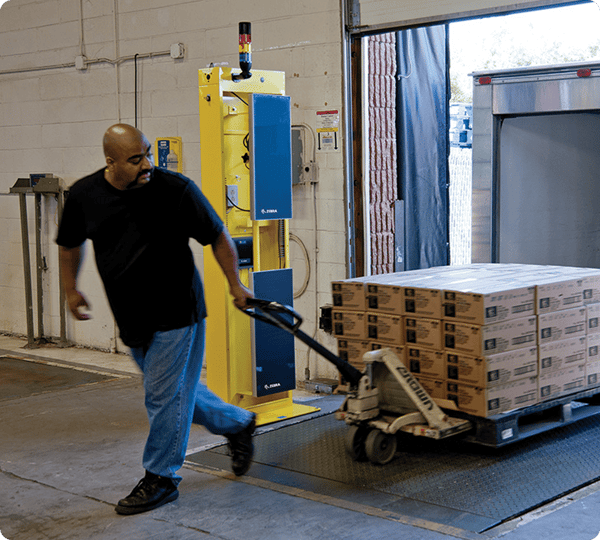
As pallets or units pass a fixed reader at a dock door (or other choke point) or get scanned with a mobile reader, RedBeam checks the tag IDs against the expected order in real time.
shipment-verifcation-accordion
Flag or clear
A match clears the shipment. A mismatch triggers an immediate flag – a light bar, an alarm, an email, or a notification pushed back to your WMS or ERP – before the wrong pallet continues through the building.
shipment-verifcation-accordion
INDUSTRY USE CASES

Verify Orders with Speed and Certainty

  • Transportation & Logistics
  • Retail
  • Manufacturing
shipment-verification-transportation-logistics shipment-verification-manufacturing shipment-verification-retail

Protect every handoff

In freight and 3PL operations, shipment verification happens from the warehouse to the truck and from the truck to the next facility. RedBeam RFID ensures your operations can confirm order accuracy whenever a shipment enters or leaves your custody.
  • Verify that full trailer loads match manifests before doors close.
  • Flag loading errors at cross-docks instead of letting mistakes pass on through.
  • Reduce disputes with carriers and downstream partners over what actually shipped. 

Cut chargebacks before they start

Retail vendor compliance programs penalize shipments that don’t match what was ordered, down to the SKU and quantity. RedBeam RFID helps increase retail supply chain partner trust with verifiable pick, pack, and ship accuracy on every order.
  • Confirm that SKU, quantity, and container are an exact match to the PO.  
  • Reduce chargebacks tied to inaccurate shipments.
  • Give customer service real answers when order disputes arise.
  • Retailers get built-in proof of inventory received without relying on manual audits to catch discrepancies.

Keep component shipments honest

Missing or incorrect parts can stall an entire production line – leaving manufacturers that ship finished goods or components to assembly partners little room for error. RedBeam RFID lets you confirm shipment accuracy right up to the point of loading.
  • Verify component shipments against purchase orders before trucks leave.
  • Catch partial or mismatched shipments before they become another plant’s problem.
  • Support traceability requirements with a confirmed, time-stamped record of precisely what shipped. 

Work with the System That’s Already Tracking the Order

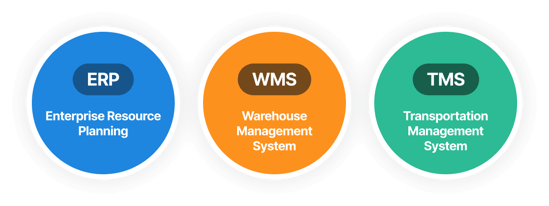
RedBeam RFID doesn’t replace your system of record. Your ASN, PO, customer order, or manifest still lives where it always has. RedBeam uses REST integration to pull the necessary order details, confirm shipments against them, and push results back to your ERP, WMS, or TMS.

shipment-verification-integrations

Shipment Verification Insights

What is RFID Technology

What Is RFID Technology? A Beginner’s Guide to the Tech That’s Everywhere

RedBeam Blog Photos (1000 x 600 px) (2)-1

Inventory Shrinkage: Causes, Formula, and How to Prevent It

RedBeam Blog Photos (1000 x 600 px) (4)

The Future of RFID Technology

Catch Mistakes Before They Ship

See how RedBeam RFID verifies shipments in real time.

RFID Shipment Verification FAQs

Q: Can shipment verification happen at the individual unit level, or only at the container level?
A: Both. RedBeam RFID verifies shipments at the individual unit level using GS1-serialized GTINs (SGTINs) and at the container level using serialized license plates (SSCCs) for pallets, cases, or totes. This flexibility lets you trace items from picking through loading without manual counting.
Q: Does RedBeam do shipment verification on its own, or does it need to integrate with other systems

A: RedBeam verifies shipments independently, but integrates with your existing systems. It doesn’t become or replace your system of record for orders – that remains your WMS, ERP, or order management platform.

RedBeam uses REST APIs to connect with those systems, pull in data that needs verifying (i..e, ASN, PO, customer order, manifest, etc.), and confirm it’s correct.

Q: Can shipment verification be done with a mobile device, fixed readers, or both?
A: Both – and most operations use a mix. Fixed readers at dock doors can trigger real-time feedback (via light bars or audible alarms connected to the reader’s GPO port, for example) the moment an incorrectly loaded container enters the shipping zone. Mobile readers, on the other hand, give you flexibility for conducting spot checks and lower-volume shipment verifications.
Q: What is RFID shipment verification?
A: RFID shipment verification uses RFID tags and readers to automatically confirm that the items in a shipment match what was ordered, received, or shipped without manual counting or barcode-by-barcode scanning.
Q: How is RFID shipment verification different from barcode verification?
A: RFID systems use radio waves to accurately, automatically verify entire shipments in seconds. Barcode-based systems require item-by-item, line-of-sight scanning to confirm orders – a slower process that, because it depends on the skill or diligence of the person holding the scanner, naturally involves greater risk of error. 

RedBeam RFID uses electromagnetic fields to capture data from items bearing tags encoded with unique ID numbers. When an RFID tag enters the range of a reader, the tag wirelessly transmits its information. This enables RedBeam to read multiple tags at once, even inside boxes or on pallets from several feet away. 

Q: What RFID hardware does shipment verification require?
A: RedBeam RFID runs on Zebra RFID hardware, including handheld readers like the RFD40 and RFD90 sleds paired with TC5x or TC22 series mobile devices, and fixed readers like the FX9600 and FXR90, which are positioned at dock doors, conveyor lines, or staging areas. Both types of readers enable speed and accuracy.
Q: Can RFID verify that pickers selected the right items before an order ships?
A: Yes. As pickers select items against an order, RedBeam RFID can confirm the pick matches what was ordered in real time, catching a wrong item before it’s packed rather than after a customer opens the box.
Q: How long does it take to implement RFID shipment verification?
A: Implementation timelines for RFID vary based on your existing setup. Factors to consider include your physical infrastructure, how many dock doors or checkpoints need readers, and whether your items are already GS1-tagged. Most RedBeam customers pilot shipment verification at a single location before expanding to the full facility or network.